1. Executive summary
KAIDA Token is the native utility token of the KAIDA ecosystem. It is designed as a structured, disciplined, long-term digital utility asset powering education, services, commerce, and secure transactions across Africa.
KAIDA is NOT:
- A speculative meme coin
- A short-term fundraising instrument
- A hype-driven asset
It is an ecosystem infrastructure layer.
Built on BNB Smart Chain (BEP-20 standard), KAIDA enables incentive-driven participation, ecosystem payments, structured rewards, staking mechanisms, and future governance. With a fixed supply of 1,000,000,000 tokens and controlled multi-year emission, KAIDA prioritizes sustainability over inflation.
Mission
To build a practical digital economic layer that supports education, employment, commerce, and entrepreneurship across Africa.
2. Introduction
2.1 About KAIDA
KAIDA (Kainuwa Digital Africa Ltd) is an African technology and education company focused on:
- Digital education
- Youth empowerment
- Verified service platforms
- Secure digital commerce
- Marketplace infrastructure
The ecosystem sectors include:
- Kainuwa Academy: education platform
- Kainuwa Works: verified artisan and service marketplace
- Kainuwa Escrow: secure transaction infrastructure
- Kainuwa Marketplace: structured commerce platform
KAIDA Token functions as the unified economic layer across all sectors. Platform status is shown on the home page.
2.2 Vision
To build a sustainable African digital ecosystem that creates opportunity through education, innovation, verified services, and structured commerce.
2.3 Mission
To create a disciplined, incentive-driven digital economy that rewards participation, learning, productivity, and contribution.
3. The structural challenge
3.1 Education accessibility gap
Limited access to monetizable digital skills.
3.2 Informal service markets
Artisan and service industries lack structure, verification, and trust.
3.3 Payment fragmentation
Disconnected payment systems reduce ecosystem synergy.
3.4 Youth unemployment
Weak pipelines between skill acquisition and income generation.
3.5 Low incentive alignment
Most platforms operate transactionally without long-term engagement models.
4. The KAIDA solution
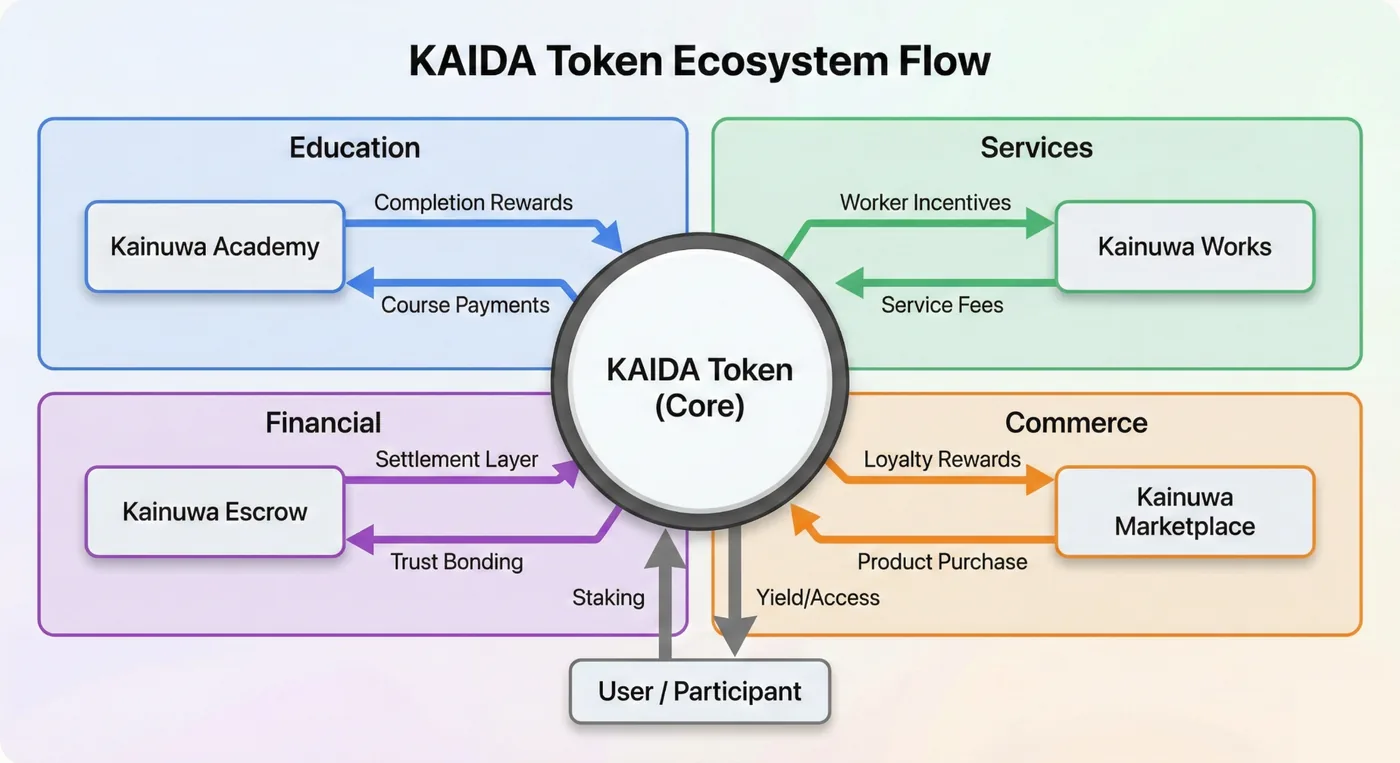
KAIDA introduces a unified token layer that rewards structured learning, enables trusted service transactions, supports marketplace commerce, incentivizes participation, and aligns ecosystem growth with user contribution.
It creates a circular internal economy where value circulates across sectors.
5. Ecosystem integration
5.1 Kainuwa Academy
Course payments, cashback rewards, completion incentives, affiliate commissions, scholarship programs.
5.2 Kainuwa Works
Service payments (future integration), worker incentives, verified participation rewards, reputation-linked utility.
5.3 Kainuwa Escrow
Secure transaction settlement layer, escrow-backed payments, dispute-handling infrastructure.
5.4 Kainuwa Marketplace
Product purchases, seller reward mechanisms, loyalty-based incentives, platform-level economic alignment.
6. Token utility
6.1 Rewards utility
- Course completion
- Referrals
- Verified contribution
- Promotional programs
6.2 Payment utility
- Paying for courses and services
- Purchasing products
- Receiving discounts
6.3 Staking utility
- Lock tokens for ecosystem rewards
- Participate in loyalty systems
- Reduce circulating supply
6.4 Governance utility
- Vote on structured proposals (future phase)
- Contribute to governance mechanisms
- Activates after maturity
7. Tokenomics
Total supply: 1,000,000,000 KAIDA (fixed)
No minting beyond fixed supply.
Gradual release over 5 to 10 years.
Platform growth, partnerships and infrastructure.
1-year cliff, then 3-year linear vesting.
Long-term stability and contingency planning.
Gradual liquidity provisioning.
Emission strategy
Controlled multi-year distribution • No sudden unlock shocks • Vesting alignment • Gradual reward allocation • Inflation discipline
8. Economic model
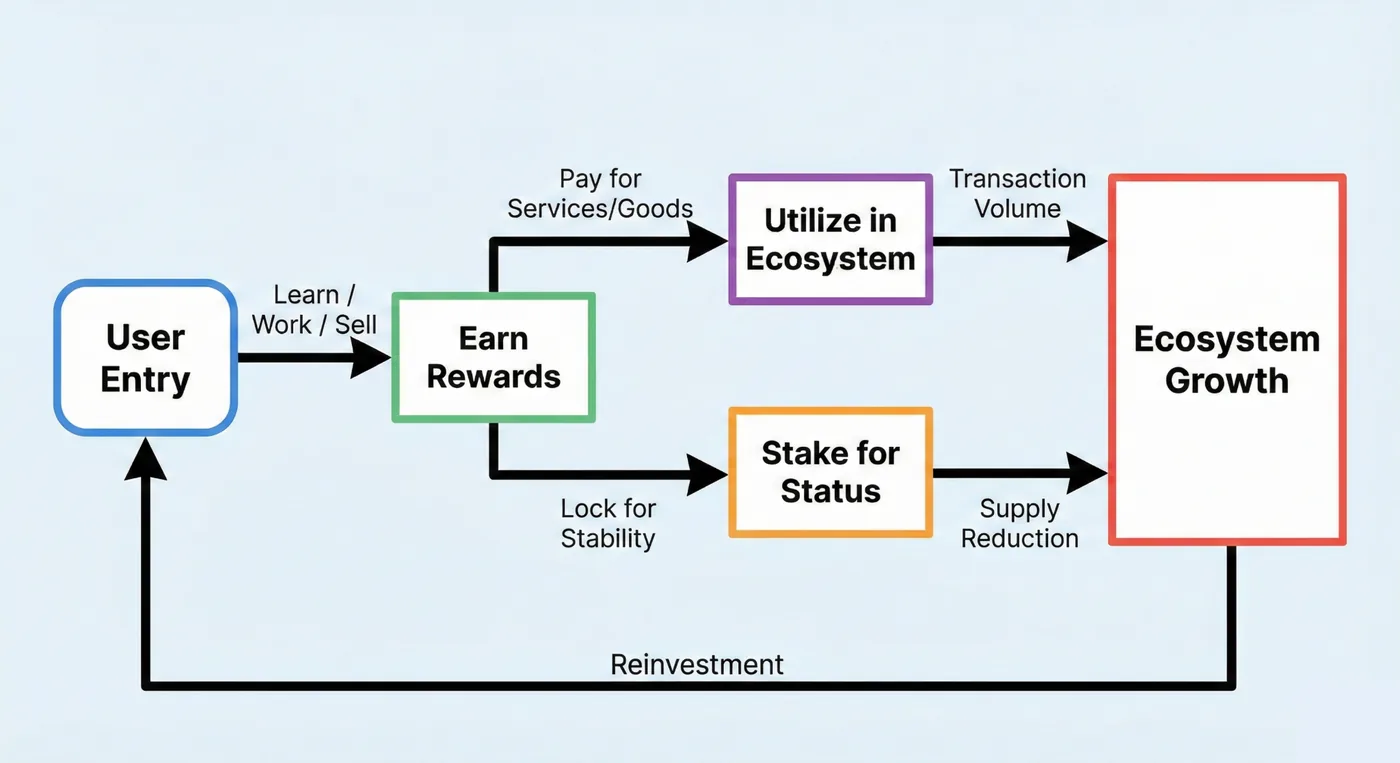
Reward → Use → Stake → Reinvest → Participate
This circular utility structure:
- Encourages retention
- Reduces sell pressure
- Aligns ecosystem incentives
- Supports long-term stability
9. Technical architecture
- Blockchain
- BNB Smart Chain
- Standard
- BEP-20
- Contract name
- KaidaToken
- Total supply
- 1,000,000,000
- Supply model
- Fixed (no minting)
- Contract address
0x97aC69Dd55C539B28a805010a6b8AaD27F4745F3
10. Security and risk disclosure
Security principles include transparent allocation, vesting enforcement, controlled release, and utility-driven demand.
11 & 12. Strategic roadmap
Governance roadmap
- Phase 1: Utility launch
- Phase 2: Ecosystem integration
- Phase 3: Staking activation
- Phase 4: Governance framework
- Phase 5: Structured voting mechanisms
Governance activation depends on ecosystem maturity.
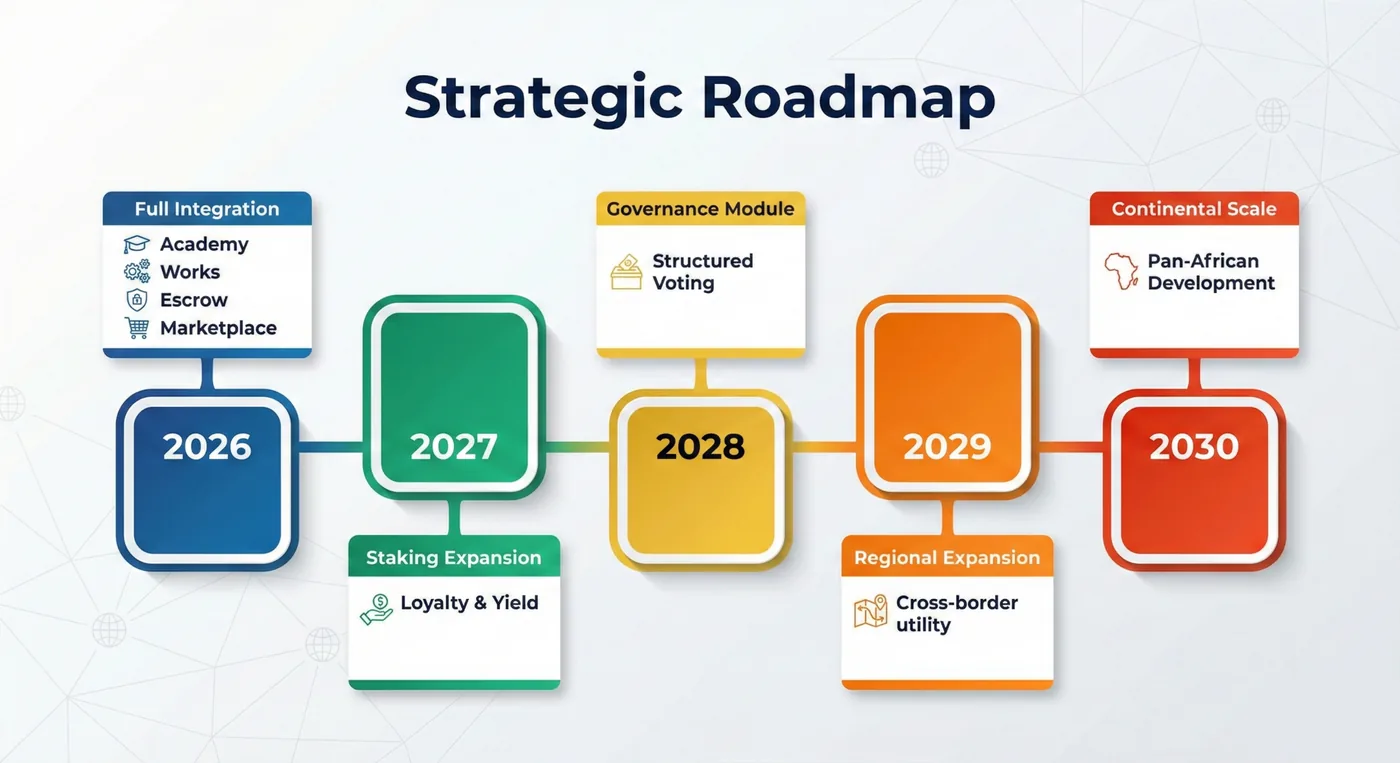
Development roadmap
- 2026Full integration: Academy, Works, Escrow, Marketplace
- 2027Staking expansion
- 2028Governance module
- 2029Regional ecosystem expansion
- 2030Continental scale development
13. Legal considerations
KAIDA is a utility token. It does not represent equity, ownership, dividends, profit guarantees, or investment contracts. Participation is voluntary and ecosystem-based. Compliance efforts will align with jurisdictional requirements.
14. Conclusion
KAIDA Token is the economic backbone of the KAIDA ecosystem. It connects education, verified services, secure transactions, and marketplace commerce under one disciplined, incentive-driven structure.
This is infrastructure, not hype.